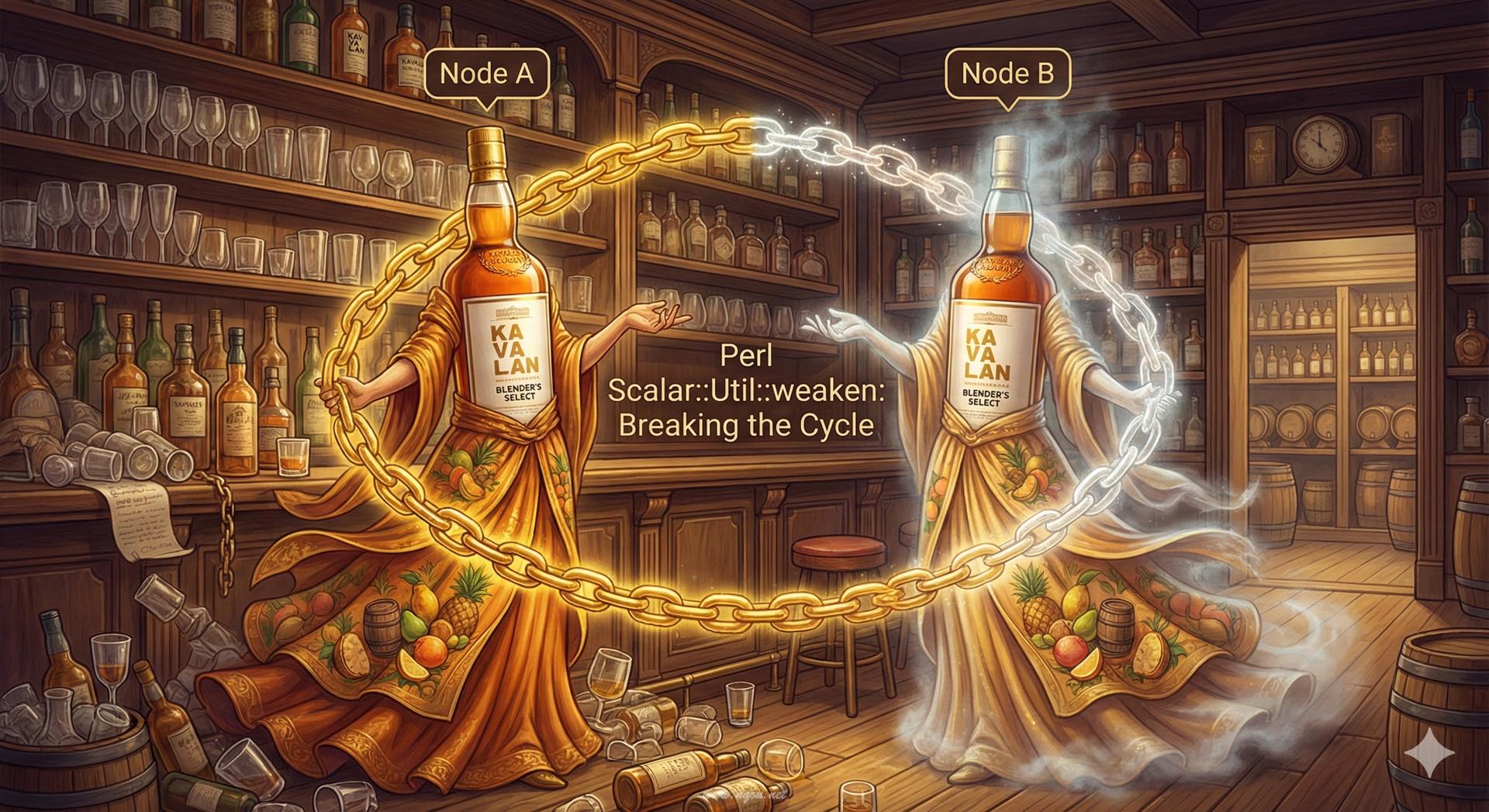
私はPerlとウイスキーが大好きです
KAVALAN BLENDER’S SELECTのグラスを傾けながら、琥珀色の液体が喉を滑り落ちる感覚を味わう。ストレートで、ゆっくりと。急がず、じっくりと。
このKAVALAN、ご存知ですか?台湾・宜蘭県で2005年に創業した、比較的若い蒸留所から生まれたウイスキーです。亜熱帯気候という一見「ハンデ」に思える環境を、むしろ「武器」に変えた戦略が見事。スコットランドで10年かかる熟成が、台湾の高温多湿では3〜4年で完了します。天使の分け前(エンジェルズシェア)は年間10〜15%と驚異的ですが、その分、樽との相互作用が劇的に加速し、濃密で複雑な味わいが短期間で生まれるのです。
BLENDER’S SELECTは、マンゴー、パイナップル、熟した洋梨やリンゴのフルーティな香り。口に含むと滑らかで豊かな果実味(トロピカル+リンゴ系)が広がり、バニラやキャラメルの甘さが感じられます。複数の樽をブレンド(主にアメリカンオーク系とシェリー系を取り合わせているとされる)した、まさに「ブレンダーの技」が光る一本。チビチビやりながらコードを書く、至福の時間です。
ウイスキーの楽しみ方とPerlのコーディング、実は驚くほど似ています。どちらも「ちょうどいいバランス」が命。ウイスキーを水で割りすぎれば風味が失われ、Perlでリファレンスを持ちすぎればメモリリークが発生する。そして、その絶妙なバランスを取るための魔法が Scalar::Util::weaken なのです。
今夜は、このKAVALANをチビチビやりながら、Perlの weaken について語りましょう。
Perlのリファレンス — 参照の基本
weaken を理解する前に、まずPerlのリファレンスについておさらいしましょう。ウイスキーボトルのラベルを読むように、丁寧に。
スカラー・配列・ハッシュのリファレンス
 1
 2
 3
 4
 5
 6
 7
 8
 9
10
11
12
13
14
15
16
17
18
19
20
21
| use strict;
use warnings;
# スカラーへのリファレンス
my $whiskey_name = "KAVALAN BLENDER'S SELECT";
my $ref_to_name = \$whiskey_name;
print "Whiskey: $$ref_to_name\n"; # デリファレンス
# 配列へのリファレンス
my @bottles = qw(KAVALAN Yamazaki Hibiki);
my $ref_to_bottles = \@bottles;
print "First bottle: $ref_to_bottles->[0]\n";
# ハッシュへのリファレンス
my %tasting_notes = (
aroma => 'fruity and floral',
taste => 'smooth with vanilla',
finish => 'long and warming'
);
my $ref_to_notes = \%tasting_notes;
print "Aroma: $ref_to_notes->{aroma}\n";
|
これらのリファレンスは「強参照(strong reference)」と呼ばれます。グラスにウイスキーがある限り、その存在は確かなもの。リファレンスがある限り、データは消えません。
weaken とは何か? — 弱参照の魔法
Scalar::Util::weaken は、強参照を弱参照(weak reference)に変換する関数です。
 1
 2
 3
 4
 5
 6
 7
 8
 9
10
11
12
13
14
15
16
17
18
| use strict;
use warnings;
use Scalar::Util qw(weaken isweak);
my $bottle = { name => "KAVALAN" };
my $ref = $bottle; # 強参照
print "Before weaken: ", (isweak($ref) ? "weak" : "strong"), "\n";
weaken($ref); # 弱参照に変換
print "After weaken: ", (isweak($ref) ? "weak" : "strong"), "\n";
# $bottleが存在する間は$refも有効
print "Ref is defined: ", (defined $ref ? "yes" : "no"), "\n";
# 元のデータを削除すると...
undef $bottle;
print "After undef bottle: ", (defined $ref ? "yes" : "no"), "\n";
# 出力: After undef bottle: no
|
弱参照は、データの存在を「保証しない」参照です。まるで、ウイスキーの香りのようなもの。グラスにウイスキーがあれば香りも楽しめますが、ウイスキーを飲み干せば香りも消える。弱参照はそういう存在なのです。
なぜ弱参照が必要なのか
強参照だけでは、参照カウント方式のメモリ管理において循環参照によるメモリリークが発生します。これは、空のボトルを延々と棚に並べ続けるようなもの。いつかは棚が満杯になってしまいます。
パターン1: 循環参照によるメモリリーク — 双方向リスト
最も分かりやすい例は、双方向リストです。
問題のあるコード(メモリリークあり)
 1
 2
 3
 4
 5
 6
 7
 8
 9
10
11
12
13
14
15
16
17
18
19
20
21
22
23
24
25
26
27
28
29
30
31
32
33
| use strict;
use warnings;
package Node;
sub new {
my ($class, $value) = @_;
bless {
value => $value,
next => undef, # 次のノードへの参照
prev => undef, # 前のノードへの参照
}, $class;
}
sub DESTROY {
my $self = shift;
print "Destroying node: $self->{value}\n";
}
package main;
{
my $node1 = Node->new("First pour");
my $node2 = Node->new("Second pour");
# 双方向リンクを作成
$node1->{next} = $node2; # node1 -> node2
$node2->{prev} = $node1; # node2 -> node1
print "Created circular reference\n";
}
# DESTROYが呼ばれない!メモリリーク発生
print "Scope ended\n";
|
このコードでは、$node1 と $node2 がお互いを参照し合っているため、スコープを抜けても参照カウントが0にならず、メモリが解放されません。
解決策: weaken を使う
 1
 2
 3
 4
 5
 6
 7
 8
 9
10
11
12
13
14
15
16
17
18
19
20
21
22
23
24
25
26
27
28
29
30
31
32
33
34
35
36
37
38
39
40
41
| use strict;
use warnings;
use Scalar::Util qw(weaken);
package Node;
sub new {
my ($class, $value) = @_;
bless {
value => $value,
next => undef,
prev => undef,
}, $class;
}
sub DESTROY {
my $self = shift;
print "Destroying node: $self->{value}\n";
}
package main;
{
my $node1 = Node->new("First pour");
my $node2 = Node->new("Second pour");
# 双方向リンクを作成
$node1->{next} = $node2; # node1 -> node2(強参照)
$node2->{prev} = $node1; # node2 -> node1(強参照)
# 一方を弱参照に変換して循環を断ち切る
weaken($node2->{prev}); # これで循環参照が解消
print "Created circular reference with weaken\n";
}
print "Scope ended\n";
# 出力:
# Created circular reference with weaken
# Destroying node: First pour
# Destroying node: Second pour
# Scope ended
|
weaken を使うことで、$node2->{prev} は弱参照となり、循環参照が解消されます。スコープを抜けると、正しく DESTROY が呼ばれてメモリが解放されます。
仕組みの解説
$node1 のスコープが終わる$node1 への参照カウントを確認$node2->{prev} は弱参照なのでカウントしない → カウントは0$node1 が破棄される$node1->{next} が削除されるので $node2 への参照が減る$node2 の参照カウントも0になる$node2 も破棄される
まるでドミノ倒しのように、美しくメモリが解放されていきます。KAVALANのフィニッシュのように、長く、そして確実に。
パターン2: ストロング参照のみ — シンプルなツリー構造
弱参照が常に必要なわけではありません。片方向のデータ構造では、強参照だけで十分な場合もあります。
 1
 2
 3
 4
 5
 6
 7
 8
 9
10
11
12
13
14
15
16
17
18
19
20
21
22
23
24
25
26
27
28
29
30
31
32
33
34
35
36
37
38
39
40
41
42
| use strict;
use warnings;
package TreeNode;
sub new {
my ($class, $value) = @_;
bless {
value => $value,
children => [], # 子ノードへの参照配列
}, $class;
}
sub add_child {
my ($self, $child) = @_;
push @{$self->{children}}, $child;
}
sub DESTROY {
my $self = shift;
print "Destroying TreeNode: $self->{value}\n";
}
package main;
{
my $root = TreeNode->new("Distillery");
my $child1 = TreeNode->new("Cask 1");
my $child2 = TreeNode->new("Cask 2");
$root->add_child($child1);
$root->add_child($child2);
print "Created tree structure\n";
}
print "Scope ended\n";
# 出力:
# Created tree structure
# Destroying TreeNode: Distillery
# Destroying TreeNode: Cask 2
# Destroying TreeNode: Cask 1
# Scope ended
|
このコードは正しく動作します。なぜなら:
- 親から子への参照のみ(一方向)
- 子から親への参照がない
- 循環参照が存在しない
これは、ウイスキーの蒸留工程のようなもの。上から下へ、一方向に流れていくだけです。
パターン3: 親子関係でのメモリリーク回避
しかし、子から親を参照したい場合はどうでしょう?これが現実のアプリケーションでは頻繁に発生します。
問題のあるコード
 1
 2
 3
 4
 5
 6
 7
 8
 9
10
11
12
13
14
15
16
17
18
19
20
21
22
23
24
25
26
27
28
29
30
31
32
33
34
35
36
37
38
39
40
41
42
43
44
45
| use strict;
use warnings;
package Parent;
sub new {
my ($class, $name) = @_;
bless { name => $name, children => [] }, $class;
}
sub add_child {
my ($self, $child) = @_;
push @{$self->{children}}, $child;
$child->{parent} = $self; # 子から親への参照を設定
}
sub DESTROY {
my $self = shift;
print "Destroying Parent: $self->{name}\n";
}
package Child;
sub new {
my ($class, $name) = @_;
bless { name => $name, parent => undef }, $class;
}
sub DESTROY {
my $self = shift;
print "Destroying Child: $self->{name}\n";
}
package main;
{
my $parent = Parent->new("Master Blender");
my $child1 = Child->new("Bottle 1");
my $child2 = Child->new("Bottle 2");
$parent->add_child($child1);
$parent->add_child($child2);
}
# スコープが終わってもDESTROYが呼ばれない!
print "Scope ended\n";
|
解決策: 子から親への参照を弱くする
 1
 2
 3
 4
 5
 6
 7
 8
 9
10
11
12
13
14
15
16
17
18
19
20
21
22
23
24
25
26
27
28
29
30
31
32
33
34
35
36
37
38
39
40
41
42
43
44
45
46
47
48
49
50
51
52
53
54
55
56
57
58
59
60
61
| use strict;
use warnings;
package Parent;
use Scalar::Util qw(weaken);
sub new {
my ($class, $name) = @_;
bless { name => $name, children => [] }, $class;
}
sub add_child {
my ($self, $child) = @_;
push @{$self->{children}}, $child;
$child->{parent} = $self;
weaken($child->{parent}); # 子から親への参照を弱参照に
}
sub DESTROY {
my $self = shift;
print "Destroying Parent: $self->{name}\n";
}
package Child;
sub new {
my ($class, $name) = @_;
bless { name => $name, parent => undef }, $class;
}
sub get_parent_name {
my $self = shift;
# 弱参照が有効かチェック
return $self->{parent} ? $self->{parent}{name} : "No parent";
}
sub DESTROY {
my $self = shift;
print "Destroying Child: $self->{name}\n";
}
package main;
{
my $parent = Parent->new("Master Blender");
my $child1 = Child->new("Bottle 1");
my $child2 = Child->new("Bottle 2");
$parent->add_child($child1);
$parent->add_child($child2);
# 子から親にアクセスできる
print "Child1's parent: ", $child1->get_parent_name(), "\n";
}
print "Scope ended\n";
# 出力:
# Child1's parent: Master Blender
# Destroying Parent: Master Blender
# Destroying Child: Bottle 2
# Destroying Child: Bottle 1
# Scope ended
|
ベストプラクティス
親子関係では、一般的に以下のルールに従います:
- 親から子への参照: 強参照(親が子の寿命を管理)
- 子から親への参照: 弱参照(子は親の存在を参照するだけ)
これは、ウイスキーとグラスの関係のようなもの。ボトル(親)がグラス(子)を所有し、グラスはボトルを参照するだけ。ボトルがなくなれば、グラスも意味を失います。
パターン4: クロージャとコールバック — イベントリスナーの罠
オブジェクトがクロージャを保持する場合、特に注意が必要です。これは経験豊富なPerl使いでも踏みやすい罠です。
問題のあるコード
 1
 2
 3
 4
 5
 6
 7
 8
 9
10
11
12
13
14
15
16
17
18
19
20
21
22
23
24
25
26
27
28
29
30
31
32
33
34
35
36
37
38
39
40
41
42
43
44
45
46
47
48
49
50
51
52
53
54
55
56
| use strict;
use warnings;
package EventEmitter;
sub new {
my ($class, $name) = @_;
bless { name => $name, listeners => [] }, $class;
}
sub on {
my ($self, $callback) = @_;
push @{$self->{listeners}}, $callback;
}
sub emit {
my ($self, $event) = @_;
$_->($event) for @{$self->{listeners}};
}
sub DESTROY {
my $self = shift;
print "Destroying EventEmitter: $self->{name}\n";
}
package Observer;
sub new {
my ($class, $name) = @_;
bless { name => $name }, $class;
}
sub DESTROY {
my $self = shift;
print "Destroying Observer: $self->{name}\n";
}
package main;
{
my $emitter = EventEmitter->new("Whiskey Bottle");
my $observer = Observer->new("Taster");
# このクロージャが$observerを捕捉する
$emitter->on(sub {
my $event = shift;
print "Observer $observer->{name} received: $event\n";
});
$emitter->emit("Pour");
# 明示的にundefしてもObserverは破棄されない
undef $observer;
# Observerが破棄されない!($emitterがクロージャ経由で保持している)
}
print "Scope ended\n";
|
クロージャが $observer への参照を保持し、$emitter がそのクロージャを保持するため、$observer は解放されません。
解決策: 弱参照を使う
 1
 2
 3
 4
 5
 6
 7
 8
 9
10
11
12
13
14
15
16
17
18
19
20
21
22
23
24
25
26
27
28
29
30
31
32
33
34
35
36
37
38
39
40
41
42
43
44
45
46
47
48
49
50
51
52
53
54
55
56
57
58
59
60
61
62
63
64
65
66
67
| use strict;
use warnings;
use Scalar::Util qw(weaken);
package EventEmitter;
sub new {
my ($class, $name) = @_;
bless { name => $name, listeners => [] }, $class;
}
sub on {
my ($self, $callback) = @_;
push @{$self->{listeners}}, $callback;
}
sub emit {
my ($self, $event) = @_;
$_->($event) for @{$self->{listeners}};
}
sub DESTROY {
my $self = shift;
print "Destroying EventEmitter: $self->{name}\n";
}
package Observer;
sub new {
my ($class, $name) = @_;
bless { name => $name }, $class;
}
sub DESTROY {
my $self = shift;
print "Destroying Observer: $self->{name}\n";
}
package main;
{
my $emitter = EventEmitter->new("Whiskey Bottle");
my $observer = Observer->new("Taster");
# 弱参照のコピーを作成
my $weak_observer = $observer;
weaken($weak_observer);
# クロージャは弱参照を捕捉
$emitter->on(sub {
my $event = shift;
return unless defined $weak_observer; # 弱参照チェック
print "Observer $weak_observer->{name} received: $event\n";
});
$emitter->emit("Pour");
print "Undefining observer...\n";
undef $observer;
$emitter->emit("Drink"); # observerは存在しないので何も起こらない
}
print "Scope ended\n";
# 出力:
# Observer Taster received: Pour
# Undefining observer...
# Destroying Observer: Taster
# Destroying EventEmitter: Whiskey Bottle
# Scope ended
|
重要なポイント
クロージャで弱参照を使う場合は、必ず defined チェックを行います:
1
| return unless defined $weak_observer;
|
弱参照は元のオブジェクトが破棄されると undef になります。チェックせずにアクセスするとエラーになります。これは、空のグラスに口をつける前に、中身があるか確認するようなものです。
パターン5: キャッシュの実装 — 適切な解放タイミング
弱参照は、キャッシュの実装にも有効です。
 1
 2
 3
 4
 5
 6
 7
 8
 9
10
11
12
13
14
15
16
17
18
19
20
21
22
23
24
25
26
27
28
29
30
31
32
33
34
35
36
37
38
39
40
41
42
43
44
45
| use strict;
use warnings;
package Cache;
use Scalar::Util qw(weaken);
sub new {
my $class = shift;
bless { storage => {} }, $class;
}
sub set {
my ($self, $key, $value) = @_;
$self->{storage}{$key} = $value;
weaken($self->{storage}{$key}); # 弱参照としてキャッシュ
}
sub get {
my ($self, $key) = @_;
return $self->{storage}{$key}; # undefかもしれない
}
sub DESTROY {
print "Destroying Cache\n";
}
package main;
my $cache = Cache->new();
{
my $data = { name => "KAVALAN", age => 10 };
$cache->set("whiskey", $data);
# キャッシュから取得可能
my $cached = $cache->get("whiskey");
print "Cached: $cached->{name}\n" if defined $cached;
# $dataがスコープを抜けると...
}
# キャッシュは自動的に無効化される
my $cached = $cache->get("whiskey");
print "Cached after scope: ", (defined $cached ? "exists" : "gone"), "\n";
# 出力: Cached after scope: gone
|
このパターンは、メモリに余裕があればキャッシュを保持し、元のデータが不要になれば自動的に解放される、非常にエレガントな実装です。
実践的なデバッグテクニック
weaken を使う際の注意点とデバッグ方法:
1. 弱参照かどうか確認する
 1
 2
 3
 4
 5
 6
 7
 8
 9
10
| use strict;
use warnings;
use Scalar::Util qw(weaken isweak);
my $data = 'data';
my $ref = \$data;
print "Is weak? ", (isweak($ref) ? "yes" : "no"), "\n";
weaken($ref);
print "Is weak? ", (isweak($ref) ? "yes" : "no"), "\n";
|
2. デストラクタでメモリリークを検出
 1
 2
 3
 4
 5
 6
 7
 8
 9
10
11
12
13
14
15
16
17
18
19
20
21
22
| use strict;
use warnings;
package MyClass;
sub new {
my $class = shift;
my $self = bless {}, $class;
print "Creating MyClass at $self\n";
return $self;
}
sub DESTROY {
my $self = shift;
print "Destroying MyClass at $self\n";
}
package main;
{
my $class = MyClass->new();
}
print "Scope ended\n";
|
DESTROY が呼ばれないなら、メモリリークの可能性があります。
3. Devel::Cycle で循環参照を見つける
 1
 2
 3
 4
 5
 6
 7
 8
 9
10
11
12
13
14
| use strict;
use warnings;
package Node;
sub new { bless {} }
package main;
use Devel::Cycle;
my $node1 = Node->new("A");
my $node2 = Node->new("B");
$node1->{next} = $node2;
$node2->{prev} = $node1;
find_cycle($node1); # 循環参照を報告してくれる
|
まとめ — ウイスキーとweakenの共通点
グラスに残ったKAVALANを一口。最後の一滴まで、丁寧に味わいます。
Scalar::Util::weaken は、Perlにおけるメモリ管理の要です。循環参照によるメモリリークを防ぎ、親子関係やコールバックを安全に実装できます。
ウイスキーを楽しむように、Perlを楽しむためには:
- バランスが大切: 強参照と弱参照のバランス
- タイミングを見極める: いつ
weaken を使うべきか - 丁寧に味わう: コードレビューでメモリリークをチェック
- 経験を積む: 実際に使ってみて、体で覚える
今夜学んだことを、明日のコードに活かしてください。そして、次のコーディングセッションには、お気に入りのウイスキーを一本用意して。
では、乾杯! 🥃
今回のコードで使用したモジュール:
Scalar::Util (コアモジュール - Perl 5.7.3以降標準搭載)weaken - 参照を弱参照に変換isweak - 弱参照かどうか判定
追加で役立つモジュール:
Devel::Cycle - 循環参照の検出(CPANから導入)
動作確認環境:
すべてのコード例は実際に動作確認済みです。コピー&ペーストして、ぜひ試してみてください!