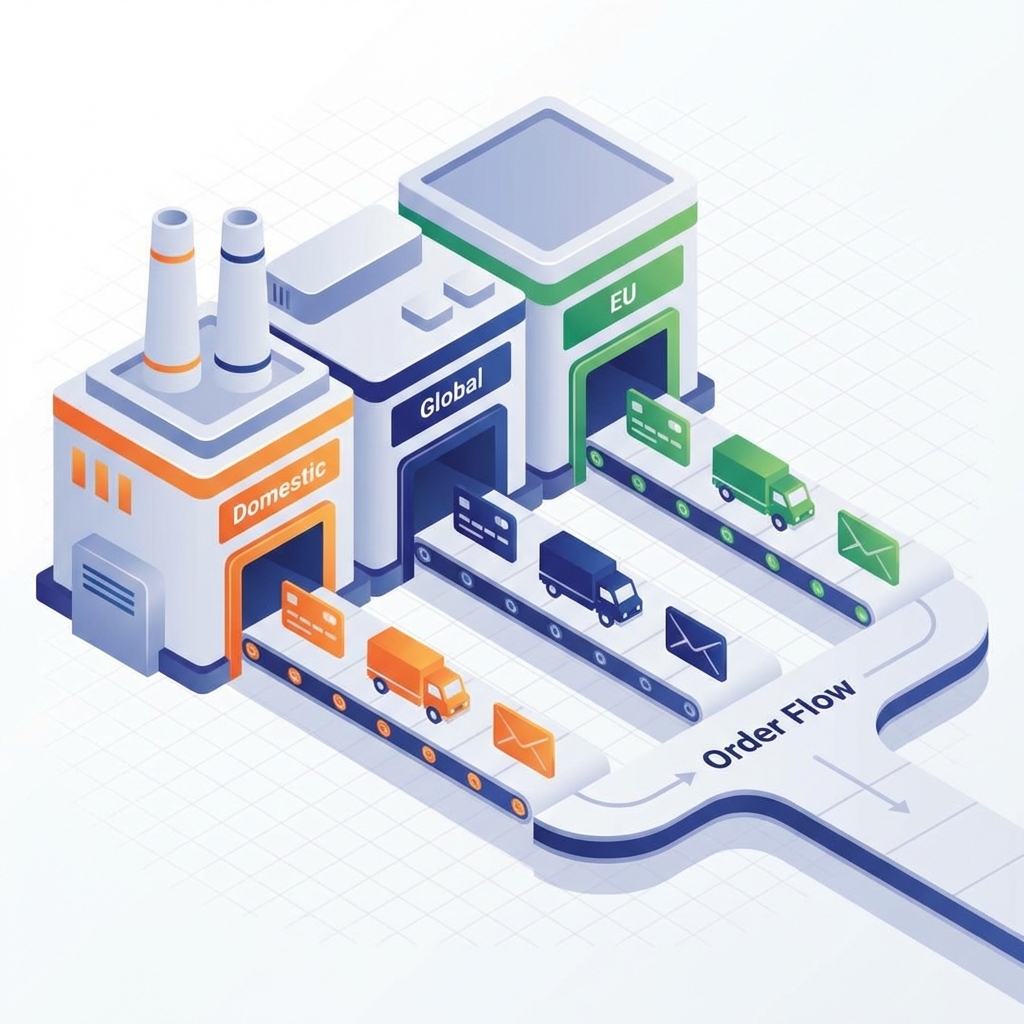
第6回では、OrderProcessorクラスを導入し、Factoryを外部から注入できる設計に進化させます。
前回の振り返り
前回は国内/海外の2つのFactoryを実装し、製品ファミリの一括生成を完成させました。
- DomesticOrderFlowFactoryとGlobalOrderFlowFactoryを実装
- ポリモーフィズムにより、クライアントはFactoryの具体クラスを知らなくてよい
- クラス数は10個に増加
今回はクライアントコードを「OrderProcessor」クラスにまとめ、Factoryを外部から注入できるようにします。
この記事で学ぶこと
- OrderProcessorクラスを定義する
- 依存性注入(Dependency Injection)を実装する
- 疎結合設計のメリットを理解する
依存性注入とは
依存性注入(DI)とは、クラスが必要とするオブジェクトを外部から渡す設計パターンです。
クラス内部でオブジェクトを生成するのではなく、コンストラクタや属性を通じて外部から受け取ります。これにより以下のメリットが得られます。
- クラス間の結合度が下がる
- テスト時にモックを注入できる
- Factoryを差し替えるだけで動作が変わる
OrderProcessorクラスの定義
Factoryを保持し、注文処理を実行するOrderProcessorクラスを定義します。
 1
 2
 3
 4
 5
 6
 7
 8
 9
10
11
12
13
14
15
16
17
18
19
20
21
22
23
24
25
26
27
28
29
30
31
32
33
34
35
36
37
38
39
| package OrderProcessor;
use v5.36;
use Moo;
# Factoryを外部から注入
has factory => (
is => 'ro',
required => 1,
);
sub process ($self, $order_id, $amount, $address, $email) {
say "=" x 50;
say "注文処理開始: $order_id";
say "=" x 50;
# Factoryから製品を生成
my $payment = $self->factory->create_payment(amount => $amount);
my $shipping = $self->factory->create_shipping(address => $address);
my $notification = $self->factory->create_notification(email => $email);
# 処理実行
my $total = $payment->process;
say "";
my $delivery_info = $shipping->ship;
say "";
$notification->notify($order_id);
say "";
say "=" x 50;
say "注文処理完了";
say "=" x 50;
return {
total => $total,
delivery_info => $delivery_info,
};
}
1;
|
以下が重要なポイントです。
factory属性でFactoryオブジェクトを保持required => 1により、Factory未指定時はエラーprocessメソッド内でFactoryを使って製品を生成
完成コード
OrderProcessorを使った完成版のコードです。
  1
  2
  3
  4
  5
  6
  7
  8
  9
 10
 11
 12
 13
 14
 15
 16
 17
 18
 19
 20
 21
 22
 23
 24
 25
 26
 27
 28
 29
 30
 31
 32
 33
 34
 35
 36
 37
 38
 39
 40
 41
 42
 43
 44
 45
 46
 47
 48
 49
 50
 51
 52
 53
 54
 55
 56
 57
 58
 59
 60
 61
 62
 63
 64
 65
 66
 67
 68
 69
 70
 71
 72
 73
 74
 75
 76
 77
 78
 79
 80
 81
 82
 83
 84
 85
 86
 87
 88
 89
 90
 91
 92
 93
 94
 95
 96
 97
 98
 99
100
101
102
103
104
105
106
107
108
109
110
111
112
113
114
115
116
117
118
119
120
121
122
123
124
125
126
127
128
129
130
131
132
133
134
135
136
137
138
139
140
141
142
143
144
145
146
147
148
149
150
151
152
153
154
155
156
157
158
159
160
161
162
163
164
165
166
167
168
169
170
171
172
173
174
175
176
177
178
179
180
181
182
183
184
185
| #!/usr/bin/env perl
use v5.36;
# --- 製品クラス(国内) ---
package DomesticPayment;
use v5.36;
use Moo;
has amount => (is => 'ro', required => 1);
sub process ($self) {
my $fee = int($self->amount * 0.03);
my $total = $self->amount + $fee;
say "【国内決済】金額: ¥" . $self->amount . " + 手数料: ¥$fee = 合計: ¥$total";
return $total;
}
package DomesticShipping;
use v5.36;
use Moo;
has address => (is => 'ro', required => 1);
sub ship ($self) {
say "【国内配送】お届け先: " . $self->address;
say " 配送業者: ヤマト運輸";
say " 配送日数: 1-2営業日";
return { carrier => 'yamato', days => 2 };
}
package DomesticNotification;
use v5.36;
use Moo;
has email => (is => 'ro', required => 1);
sub notify ($self, $order_id) {
say "【国内通知】$order_id の注文確認メールを送信";
say " 宛先: " . $self->email;
say " 言語: 日本語";
return 1;
}
# --- 製品クラス(海外) ---
package GlobalPayment;
use v5.36;
use Moo;
has amount => (is => 'ro', required => 1);
sub process ($self) {
my $fee = int($self->amount * 0.05);
my $total = $self->amount + $fee;
say "【海外決済】Amount: \$" . $self->amount . " + Fee: \$$fee = Total: \$$total";
return $total;
}
package GlobalShipping;
use v5.36;
use Moo;
has address => (is => 'ro', required => 1);
sub ship ($self) {
say "【海外配送】Delivery to: " . $self->address;
say " Carrier: FedEx International";
say " Estimated: 5-10 business days";
return { carrier => 'fedex', days => 10 };
}
package GlobalNotification;
use v5.36;
use Moo;
has email => (is => 'ro', required => 1);
sub notify ($self, $order_id) {
say "【海外通知】Order confirmation for $order_id sent";
say " To: " . $self->email;
say " Language: English";
return 1;
}
# --- 抽象Factoryロール ---
package OrderFlowFactory;
use v5.36;
use Moo::Role;
requires 'create_payment';
requires 'create_shipping';
requires 'create_notification';
# --- 国内向けFactory ---
package DomesticOrderFlowFactory;
use v5.36;
use Moo;
with 'OrderFlowFactory';
sub create_payment ($self, %args) {
return DomesticPayment->new(%args);
}
sub create_shipping ($self, %args) {
return DomesticShipping->new(%args);
}
sub create_notification ($self, %args) {
return DomesticNotification->new(%args);
}
# --- 海外向けFactory ---
package GlobalOrderFlowFactory;
use v5.36;
use Moo;
with 'OrderFlowFactory';
sub create_payment ($self, %args) {
return GlobalPayment->new(%args);
}
sub create_shipping ($self, %args) {
return GlobalShipping->new(%args);
}
sub create_notification ($self, %args) {
return GlobalNotification->new(%args);
}
# --- OrderProcessor(DI対応) ---
package OrderProcessor;
use v5.36;
use Moo;
has factory => (
is => 'ro',
required => 1,
);
sub process ($self, $order_id, $amount, $address, $email) {
say "=" x 50;
say "注文処理開始: $order_id";
say "=" x 50;
my $payment = $self->factory->create_payment(amount => $amount);
my $shipping = $self->factory->create_shipping(address => $address);
my $notification = $self->factory->create_notification(email => $email);
my $total = $payment->process;
say "";
my $delivery_info = $shipping->ship;
say "";
$notification->notify($order_id);
say "";
say "=" x 50;
say "注文処理完了";
say "=" x 50;
say "";
return { total => $total, delivery_info => $delivery_info };
}
# --- メイン処理 ---
package main;
use v5.36;
# 国内向けProcessorを作成
my $domestic_processor = OrderProcessor->new(
factory => DomesticOrderFlowFactory->new
);
$domestic_processor->process(
'ORD-2026-0007', 5000, '東京都渋谷区1-2-3', 'tanaka@example.com'
);
# 海外向けProcessorを作成
my $global_processor = OrderProcessor->new(
factory => GlobalOrderFlowFactory->new
);
$global_processor->process(
'ORD-2026-0008', 100, '123 Main St, New York, NY', 'john@example.com'
);
|
設計の改善点
DI導入により、以下の改善が得られました。
- OrderProcessorが汎用的なクラスになった
- Factoryを差し替えるだけで国内/海外を切り替えられる
- テスト時にモックFactoryを注入できる
	classDiagram
    class OrderProcessor {
        +factory
        +process(order_id, amount, address, email)
    }
    class OrderFlowFactory {
        <<Role>>
    }
    class DomesticOrderFlowFactory
    class GlobalOrderFlowFactory

    OrderProcessor --> OrderFlowFactory : uses
    OrderFlowFactory <|.. DomesticOrderFlowFactory : with
    OrderFlowFactory <|.. GlobalOrderFlowFactory : with
依存性逆転の原則(DIP)
現在の設計は依存性逆転の原則(DIP: Dependency Inversion Principle)に従っています。
- OrderProcessor(高レベルモジュール)は、具体的なFactory(低レベルモジュール)に依存しない
- 両者はOrderFlowFactoryロール(抽象)に依存する
- Factory実装を変更しても、OrderProcessorは変更不要
	flowchart TB
    subgraph 高レベル
        OP[OrderProcessor]
    end

    subgraph 抽象
        OF[OrderFlowFactory Role]
    end

    subgraph 低レベル
        DOF[DomesticOrderFlowFactory]
        GOF[GlobalOrderFlowFactory]
    end

    OP --> OF
    DOF --> OF
    GOF --> OF
矢印がすべて抽象(OrderFlowFactory Role)に向かっていることに注目してください。これが依存性の逆転です。
Factoryを切り替える例
設定に基づいてFactoryを選択する例を示します。
 1
 2
 3
 4
 5
 6
 7
 8
 9
10
| # 市場に応じてFactoryを選択
my %factories = (
domestic => DomesticOrderFlowFactory->new,
global => GlobalOrderFlowFactory->new,
);
my $market = 'domestic'; # 設定から取得する想定
my $processor = OrderProcessor->new(factory => $factories{$market});
$processor->process('ORD-2026-0009', 3000, '名古屋市中区', 'user@example.com');
|
市場の切り替えはFactoryの選択だけで完了します。OrderProcessorのコードは一切変更しません。
まとめ
この記事では以下を学びました。
- OrderProcessorクラスを定義し、Factoryを属性として保持するようにした
- 依存性注入(DI)により、Factoryを外部から注入できるようにした
- 依存性逆転の原則(DIP)に従った疎結合設計を実現した
次回は、EU市場を追加してOpen-Closed Principle(OCP)を確認します。既存コードを変更せずに拡張できることを体験しましょう。